
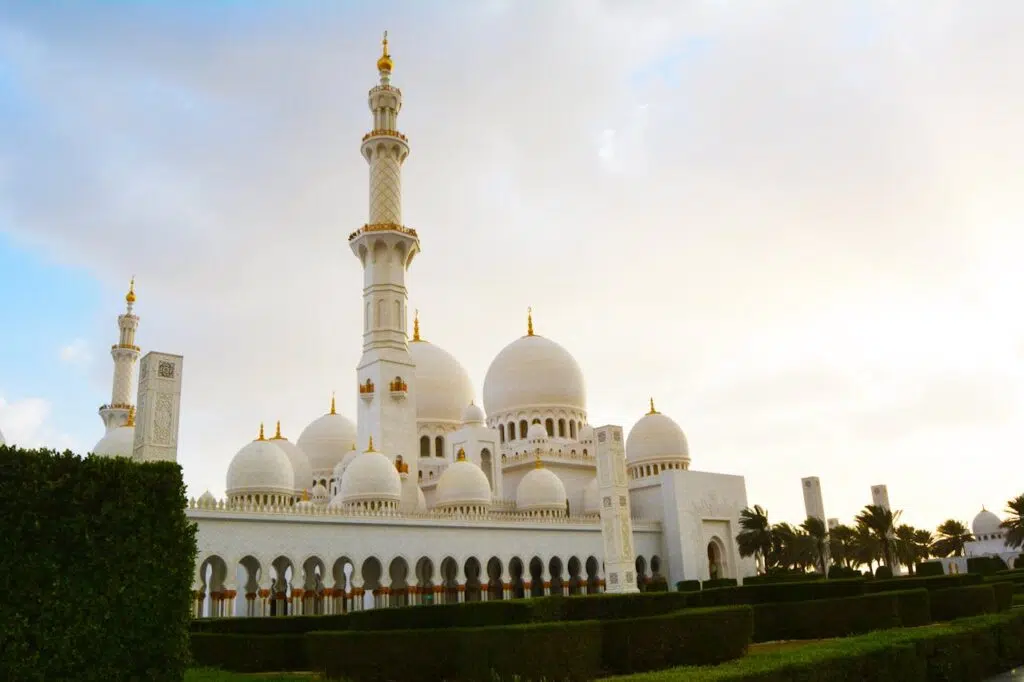
The first time I visited Dubai during Ramadan, I almost made a costly mistake. I was eating a sandwich in a taxi when the driver quietly asked me to put it away before we passed a checkpoint. That moment taught me quickly that Ramadan in Dubai 2026 is a special time to visit. It also comes with key rules travelers should know.
Many visitors assume Ramadan is a quiet period, but the opposite is often true. During the day, the city feels calmer, with fewer crowds at attractions and better hotel deals. After sunset, Dubai comes alive with busy restaurants, Ramadan markets, cultural events, and late-night shopping.
Ramadan in 2026 is expected to run from February 18 to around March 18–19. It will be followed by Eid al-Fitr. For travelers, this creates a perfect window to experience Dubai’s traditions, hospitality, and vibrant evening atmosphere.
This guide to Ramadan in Dubai 2026 explains the essential rules, timings, and travel tips visitors should know before planning their trip.
How the Islamic Lunar Calendar Determines Ramadan Dates
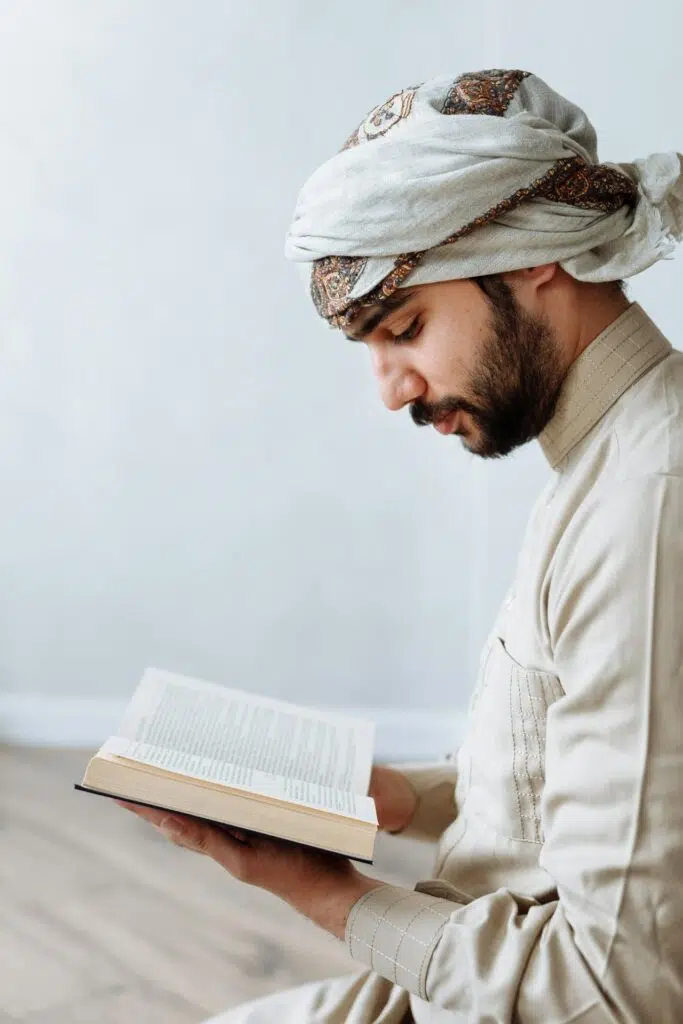
The Hijri calendar has 354 or 355 days. It is about 11 days shorter than the Gregorian calendar. This is why Ramadan starts earlier each year. Each Hijri month only begins after the visual sighting of the new crescent moon.
According to Ibrahim Al Jarwan, chairman of the Emirates Astronomy Society, the month may last 30 days. If the crescent is not seen on day 29, the new month starts after day 30.
In the UAE, official moon-sighting attempts begin after Maghrib prayer on the 29th of Sha’ban, with field teams and accredited observatories reporting across the country.
Because geography and atmospheric conditions differ, the crescent may be visible in some countries but not others on the same evening, which is why Ramadan can start on different days across the Muslim world.
Eating, Drinking and Smoking Rules During the Day
Article 313 of UAE Federal Law No. 3 of 1987 makes it a criminal offense for anyone, whether Muslim or non-Muslim, tourist or resident, to consume food or drink in public during daylight hours in Ramadan. The penalty: up to one month in prison or a fine of up to AED 2,000.
Eating in Public During Ramadan
“I didn’t know” is not a valid defense in a UAE court, and multiple non-Muslims have been brought before UAE courts for this exact offense. Legal consultant Hassan Elhais from Al Rowad Advocates confirmed that the UAE Penal Code makes no distinction between Muslims and non-Muslims.
Here’s where eating and drinking are and aren’t permitted during fasting hours:
| Location | Eating/Drinking Allowed? |
| Public streets | ❌ No |
| Shopping malls (open areas) | ❌ No |
| Inside your car (visible to the public) | ❌ No |
| Hotel room | ✅ Yes |
| Screened restaurant/indoor dining | ✅ Yes |
| Private office space | ✅ Yes |
| Hospital (medical need) | ✅ Yes |
According to Maj. Ibrahim Al Shihi of Ajman Police CID, first-time tourists are usually advised and educated rather than fined. Long-term residents who break the rule face a formal report to public prosecution. If you’re caught eating in public by mistake, apologize and move indoors immediately.
Where Tourists Can Eat During Fasting Hours
Dubai’s dining rules have relaxed significantly in recent years; restaurants and cafés no longer need to screen diners behind partitions.
Three reliable daytime options: your hotel restaurant (open for all meals throughout Ramadan); Dubai Mall and Mall of the Emirates food courts (most stay open all day); and your hotel’s private beaches (eating outdoors is permitted in those specific areas).
Quick tip: call ahead for smaller local outlets, as some still choose to open at iftar only.
Smoking Rules During Daytime Fasting Hours
Smoking in public during fasting hours is off-limits, including cigarettes, e-cigarettes, and vapes. Violating this rule in Dubai can result in a fine of AED 500 or more.
Smoke only inside your hotel room or a designated outdoor smoking cabin. Chewing gum openly in front of fasting people falls under the same expectation: keep it discreet or step fully indoors.
Dress Code and Public Etiquette During Ramadan

Ramadan doesn’t mean Dubai becomes restrictive for tourists, but it does ask for a small, deliberate shift in how you carry yourself in public.
Cover up more than usual, turn the volume down, and stay aware that the people around you may be fasting and in a state of reflection. The details are in the two sections below.
Recommended Clothing for Visitors in Public Spaces
Both men and women should dress modestly, covering shoulders and knees and avoiding tight or revealing clothing. Loose-fitting, breathable fabrics are the most practical choice, keeping you comfortable in Dubai’s February heat while respecting local customs.
For women: long trousers, maxi skirts, or loose dresses that cover the knee. An abaya and head covering are only required at mosques, not in malls or on the streets.
Most mosques provide abayas at the entrance if you don’t have one. For men: avoid shorts or sleeveless shirts in malls, markets, and mosques.
For mosque visits specifically, women must cover arms, legs, and hair. Men must wear long trousers; shorts are not permitted inside a mosque under any circumstances.
Pack one conservative outfit for cultural site visits and keep a light scarf in your bag for quick cover-ups when moving between spaces.
Respectful Behavior Tourists Should Follow
Ramadan is a time for patience and restraint, and most locals will meet you there if you’re making the effort.
Lower your voice in malls, public transport, and business districts. No arguments or raised voices in public are prohibited in Dubai at all times, but especially during Ramadan.
No public displays of affection beyond a discreet hand-hold. No loud music from your phone, speakers, or car. If invited to an iftar meal, arrive on time and be respectful of the prayer before eating begins.
A few useful greetings:
| Greeting | Meaning | When to use |
| Ramadan Kareem | Generous Ramadan | Anytime during the month |
| Ramadan Mubarak | Blessed Ramadan | Anytime during the month |
| Assalamu Alaikum | Peace be upon you | General Islamic greeting |
A Restaurant, Mall, and Attraction Timings During Ramadan
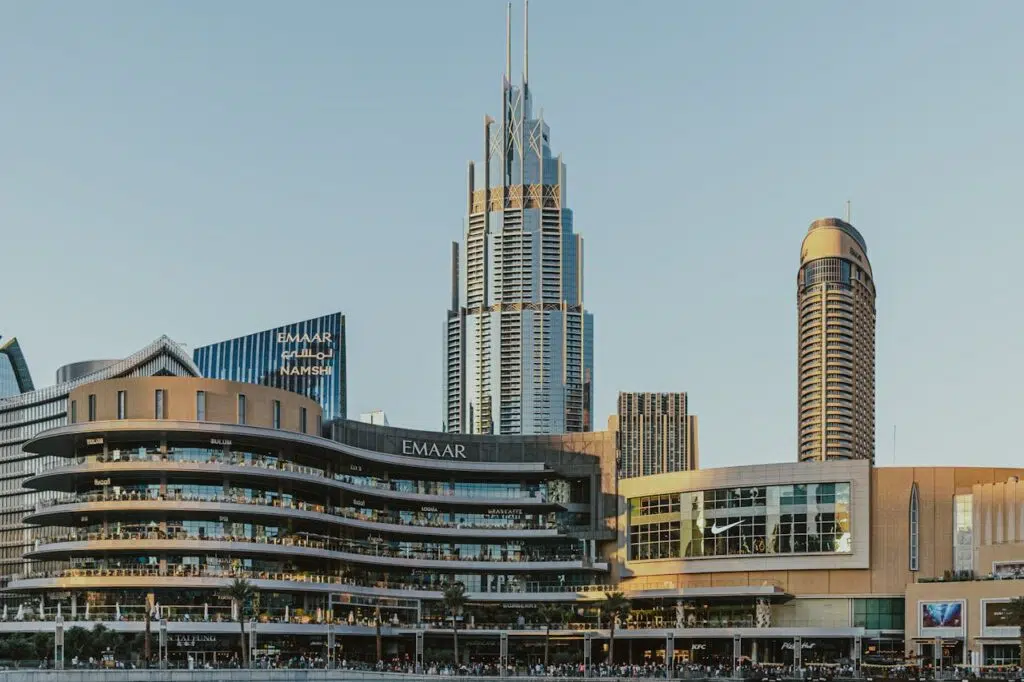
Dubai during Ramadan isn’t quiet; it’s one of the most vibrant times to visit, especially after iftar.
Shopping malls extend their operating hours throughout the holy month, with most staying open well past midnight.
Based on 2025 Ramadan timings, the most recent verified data available, here’s what to expect for 2026 (official 2026 timings will be published by malls closer to February):
| Mall | Weekday Hours | Weekend Hours |
| Dubai Mall (shops) | 10 am – 2 am (Mon–Thu) | 10 am – 1 am (Fri–Sun) |
| Mall of the Emirates | 10 am–midnight | 10 am – 1 am |
| Ibn Battuta Mall | 10 am–midnight | 10 am–1 am |
| Dubai Marina Mall | 10 am – 11 pm | 10 am – midnight |
| City Centre Deira | 10 am–midnight | 10 am – 1 am |
After iftar, the city truly comes alive. Dubai Festivals and Retail Establishment (DFRE) programs feature firework displays, light shows, outdoor markets, and cultural entertainment.
Including Oud and Qanoon performers every weekend at key venues. Ramadan markets like the Ramadan District Market run from 5 pm to midnight on weekdays and until 1 am on weekends.
Plan major attraction visits, Burj Khalifa, Dubai Frame, and desert safari, for the post-Iftar window between 8 pm and 11 pm.
Book restaurants ahead and confirm last entry times for observation decks, which often stop admitting visitors 30–60 minutes before closing.
Iftar and Suhoor Traditions in Dubai
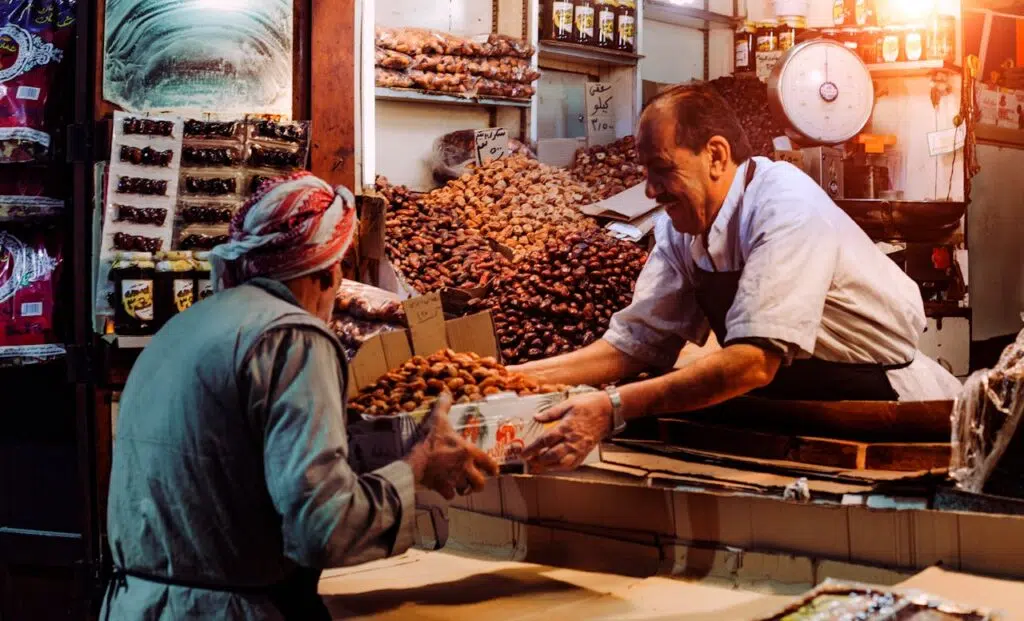
Ramadan completely reshapes Dubai’s social calendar, and for tourists, it creates some of the most memorable food experiences in the city.
Two moments define the daily Ramadan cycle: suhoor, the pre-dawn meal eaten before the fast begins, and iftar, the meal that breaks the fast at sunset.
Traditionally, iftar begins with dates and water, following the practice of the Prophet Muhammad (peace be upon him), before moving into a full communal feast.
The iftar cannon is one of Dubai’s most distinctive Ramadan traditions; cannon fire rings out at Madinat Jumeirah, Expo City Dubai, and other parts of the city to signal the start of Iftar.
Here are three verified standout iftar options for Ramadan 2026:
| Venue | Iftar Timing | Price (Adult) |
| Armani Hotel Dubai (Pavilion) | Sunset – 9:00 pm | AED 410 |
| Madinat Jumeirah Al Majlis | Sunset – 8:30 pm | AED 350 |
| Burj Al Arab Al Diwan | Sunset – 8:30 pm | AED 360+ |
The Al Diwan at Jumeirah Burj Al Arab returns for Ramadan 2026 with international and Arabic flavors, live cooking stations, and nightly qanun performances.
At Armani/Pavilion, the outdoors iftar offers direct Burj Khalifa and Dubai Fountain views alongside live oud music.
Suhoor runs much later. Most hotel suhoor tents open from around 9:30 pm and run until 3 am, with à la carte menus, shisha, and live oud performances.
Can tourists join Iftar meals in Dubai?
Absolutely, and it’s one of the best cultural experiences Dubai offers during Ramadan.
Tourists are warmly welcomed at Iftar gatherings across the city. Prices vary widely: budget options at mid-range hotels start from around AED 85–125 per person, standard hotel buffets run AED 180–250, and premium Ramadan tents at five-star properties, such as the Bab Al Shams desert resort, reach AED 350 per adult.
Every iftar buffet includes dates and traditional Ramadan juices such as laban, jallab, and tamarind. Alcohol is not served at any iftar in Dubai during Ramadan.
Getting Around Dubai During Ramadan
Ramadan reshapes Dubai’s traffic completely, and the pre-Iftar window will catch you off guard if you don’t plan around it.
I once left my apartment at 5:45 pm during Ramadan, thinking I’d beat the traffic. Forty minutes later, I’d moved 800 meters.
In 2026, iftar falls between approximately 6:10 pm and 6:40 pm. Roads clog from around 5:00 pm. RTA officially warns that fasting-related fatigue significantly raises accident risk in this window.
Historical data from Google Maps and Waze confirms it as the worst congestion period of the entire month.
Here’s the full Ramadan transport schedule:
| Transport | Weekday Hours | Friday Hours |
| Dubai Metro (Red/Green Line) | 5:00 am – midnight | 5:00 am – 1:00 am |
| Dubai Tram | 6:00 am – 1:00 am | 6:00 am – 1:00 am |
| RTA Public Buses | 4:30 am – 1:00 am | 6:00 am – 1:00 am |
| Salik Toll (free window) | 2:00 am – 7:00 am | 2:00 am – 7:00 am |
| RTA Free Parking | 6:00 pm – 8:00 pm | 6:00 pm – 8:00 pm |
Metro frequency jumps post-Iftar; trains run every 4 minutes between 6:30 pm and 9:00 pm. The Sharjah–Dubai border at Al Nahda and the Mirdif entry points are the worst chokepoints, adding 30–45 minutes from Sharjah in the pre-Iftar window.
Take the metro for evening outings. Use the free RTA parking window (6:00 pm–8:00 pm) if you must drive. Download the S’hail app for real-time updates. Plan non-essential travel before 4:00 pm or after 8:00 pm.
Driving During the Pre-Iftar Rush Hour
Most road accidents during Ramadan occur just before sunset, often due to speeding, reckless overtaking, and running red lights as drivers rush home to break their fast.
Traffic and security patrols are intensified during this window, especially around mosques and busy market areas. The worst window is between 2 pm and 4 pm, and the 30 minutes on either side of Iftar; avoid these periods for long trips where possible. Leave 30–45 minutes early to avoid the Iftar rush entirely.
Dubai enforces speed limits between 60km/h and 120km/h with a standard 20km/h grace buffer before radar fines trigger. Speeding by over 60 km/h above the posted limit can result in vehicle impoundment for up to 60 days.
Keep double the usual following distance, avoid sudden lane changes, and keep dates and water in the car so you can break your fast safely at the roadside if needed.
Taxi and Transport Availability Around Sunset
The 30-minute window before iftar is the single worst time to try hailing a taxi or opening Careem in Dubai.
Every driver wants to be home or parked before sunset, and app-based surge pricing kicks in hard. Careem and Uber surge pricing make them significantly more expensive than RTA taxis during peak hours.
RTA taxis use fixed metered fares with no surge. For short trips around iftar, Hala Taxi via the Careem app is generally the most affordable option.
Book your ride at least 45 minutes before iftar; waiting times spike sharply in the final 20 minutes. Top up your NOL card in advance to avoid queues at ticket machines during busy evening periods.
Things Tourists Can Enjoy During Ramadan in Dubai
Ramadan is genuinely one of the best times to visit Dubai, and most visitors who experience it say the same thing after.
You’ll find festive city-wide decorations, bustling night markets, lavish iftars, significant hotel and mall discounts, and a joyous spirit building toward Eid al-Fitr.
A desert safari timed around Iftar is one of the best-value experiences in the city right now. Daytime attractions like the Burj Khalifa, Dubai Museum, and Dubai Creek are noticeably quieter before Iftar, with shorter queues and calmer crowds.
Cultural Experiences and Ramadan Night Markets
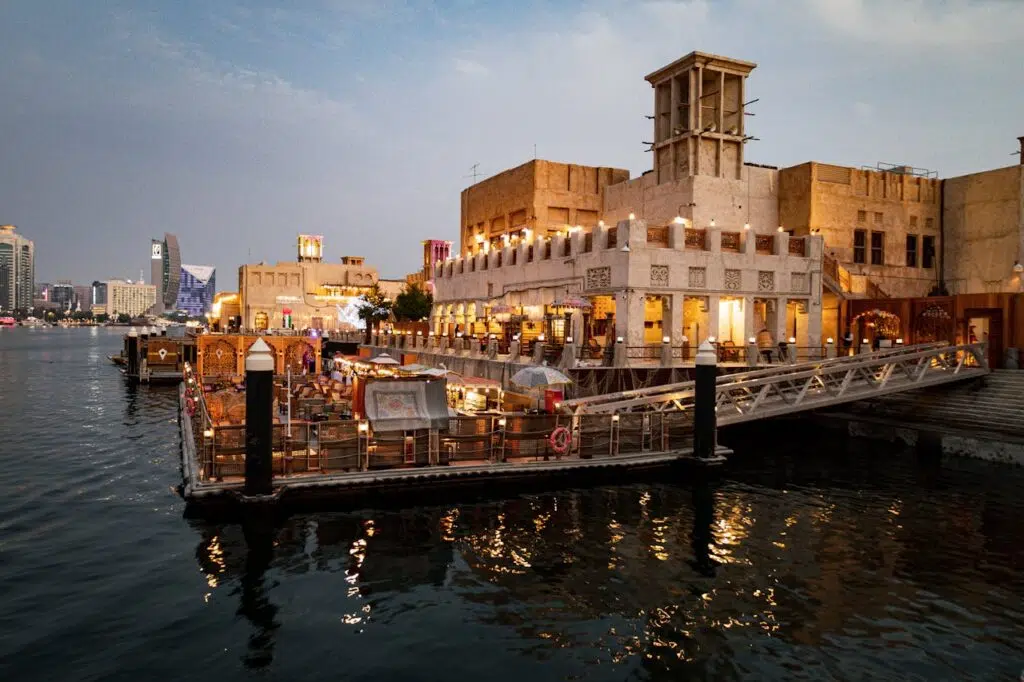
Most Ramadan markets in Dubai open around 8 pm and close between midnight and 2 am, built entirely around the post-Iftar crowd. Lanterns light the pathways, bakhoor incense drifts through the air, and the pace of the city shifts completely after sunset.
Here are four verified markets worth visiting during Ramadan 2026:
| Market | Location | Timings (2025 baseline) | Highlights |
| Global Village Ramadan Wonders | Expo City area | Sun–Wed 5 pm–1 am / Thu–Sat 5 pm–2 am | 90 cultures, fireworks, Tanoura dancers |
| Ramadan District | Jumeirah Emirates Towers | 5 pm – 2 am daily | Henna, calligraphy, and cooking classes |
| Al Seef Night Market | Dubai Creek | 6 pm – midnight | Oud performances, heritage crafts |
| Expo City Ramadan Market | Expo City Dubai | 5 pm – midnight | 20+ food outlets, theatrical shows |
Look out for famous lanterns, handmade prayer mats, premium Ajwa and Medjool dates, and Arabic calligraphy art. Hands-on workshops in calligraphy, pottery, and henna drawing run throughout the month.
Arrive before peak hours, carry cash for artisan stalls, and use the metro. Parking near major markets fills up fast after iftar.
Desert Safaris and Evening Activities After Iftar
Evening desert safaris during Ramadan are one of Dubai’s most underrated tourist experiences, and February’s cooler desert temperatures make 2026 an ideal year to book one.
The first time I did an evening desert safari during Ramadan, I didn’t expect to feel moved. When the Maghrib call to prayer came on at camp, and everyone went quiet, I did.
Pickup times for Ramadan evening desert safari experiences typically run between 3:00 pm and 3:30 pm, with drop-off around 9:30 pm, timed so guests arrive at camp before sunset and break their fast comfortably at iftar.
Belly dancing and alcohol are not available during Ramadan at any safari camp. What remains fully available includes dune bashing, camel rides, sandboarding, henna painting, and a full BBQ iftar buffet after sunset. Morning safaris starting before 8 am are also available, quieter and cooler, and have no restrictions.
Book at least one week ahead. Desert Iftar camp experiences at venues like Bab Al Shams and Nara Desert Escape sell out quickly each Ramadan.
Important Dos and Don’ts for Visitors
Here is the complete reference table every tourist visiting Dubai during Ramadan 2026 should read before landing:
| Rule | Do ✅ or Don’t ❌ | Penalty if Broken | |
| 1 | Eat, drink or smoke in public during daylight | ❌ Don’t | AED 2,000 fine or up to 1 month jail (Article 313) |
| 2 | Dress modestly; cover shoulders and knees | ✅ Do | Asked to leave venue; potential fine |
| 3 | Play loud music in public or from your car | ❌ Don’t | Fine up to AED 10,000 |
| 4 | Display public affection (kissing, hugging) | ❌ Don’t | Fine up to AED 1,000, arrest, or deportation (Article 358) |
| 5 | Greet people with “Ramadan Kareem.” | ✅ Do | N/A; builds goodwill |
| 6 | Argue, swear or make rude gestures in public | ❌ Don’t | Fine up to AED 10,000 or imprisonment |
| 7 | Eat and drink inside your hotel room or a screened restaurant | ✅ Do | N/A; fully permitted |
| 8 | Smoke or vape in public during fasting hours | ❌ Don’t | AED 500+ fine |
| 9 | Accept iftar invitations from locals or colleagues | ✅ Do | N/A — sign of cultural respect |
| 10 | Photograph people without consent | ❌ Don’t | Criminal charges under UAE Cybercrime Law |
Under Article 313 of the UAE Penal Code, openly eating, drinking, or smoking in public during Ramadan can result in fines of up to AED 2,000 or up to one month in jail, and this applies to everyone, Muslim and non-Muslim alike.
The truth is, Dubai is genuinely welcoming during Ramadan; these rules exist to maintain mutual respect, not to restrict your experience.
Conclusion
Planning a trip to Dubai during the holy month can feel a little uncertain if you’ve never experienced it before. The truth is that visiting Dubai during Ramadan is not something travelers should avoid; it’s simply something to understand and plan for.
During the daytime, the city becomes calmer and more relaxed. Tourist attractions are quieter, beaches and shopping malls are less crowded, and many hotels offer good discounts on stays and experiences. It’s a slower pace that many travelers actually enjoy.
But once the sun sets, everything changes. As soon as Iftar begins, Dubai comes alive. Restaurants fill with families and visitors, Ramadan markets open, malls stay busy late into the night, and cultural events continue well past midnight.
For visitors, the expectations are simple: avoid eating or drinking in public during fasting hours, dress respectfully, and be mindful of the quieter daytime atmosphere. In return, travelers get to experience one of the most unique cultural seasons in the city, which is full of hospitality, food, and late-night celebrations.
For many travelers, Visiting Dubai During Ramadan turns out to be one of the most memorable times to experience the city.
FAQs
Can tourists drink alcohol during Ramadan in Dubai?
Yes, alcohol is still available during Ramadan but usually only in licensed hotel bars and restaurants after sunset. Some venues limit service during the day or close temporarily during the holy month.
Are nightclubs open in Dubai during Ramadan?
Most nightclubs close during Ramadan because live music, DJs, and dancing are typically restricted during the holy month. Bars and lounges in licensed hotels usually stay open but operate more quietly.
Do tourists have to fast during Ramadan in Dubai?
No, tourists and non-Muslims are not required to fast during Ramadan. However, visitors are expected to respect local customs and avoid eating or drinking openly in public during fasting hours.
Can you wear swimwear at beaches and hotel pools during Ramadan?
Yes, swimwear is still allowed at hotel pools, private beaches, and resort areas. However, visitors should cover up when leaving pool or beach areas and walking in public spaces.
Are tourist attractions closed during Ramadan in Dubai?
Most attractions, malls, and landmarks remain open during Ramadan, though opening hours may change, and evening hours are often extended. Many places become busier after sunset when the fast ends.
Can you chew gum during Ramadan in public?
Chewing gum in public during fasting hours is discouraged because it resembles eating and can be seen as disrespectful to those fasting. Visitors should avoid it in public spaces during the day.
Are children required to follow Ramadan rules in Dubai?
Children are not required to fast according to Islamic tradition, and many young children do not participate in fasting. Families may allow older children to try short fasts as part of learning about the practice.